

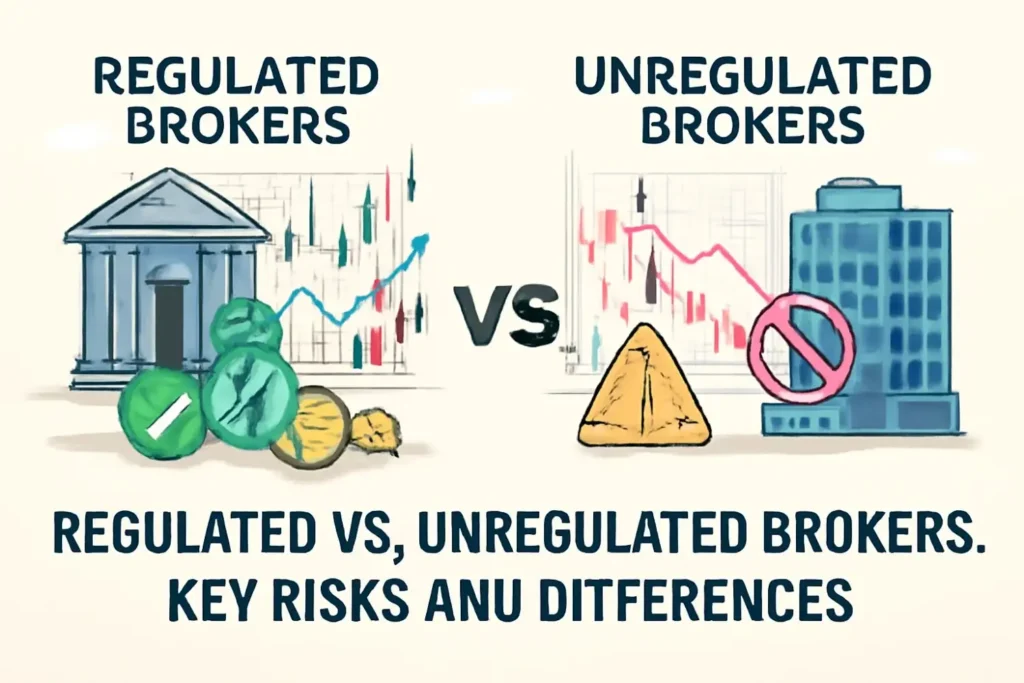
When it comes to Forex trading, one of the most critical decisions you’ll make is choosing the right broker. Whether you’re a seasoned trader or just starting, selecting a regulated broker is essential for ensuring a secure and transparent trading environment. In contrast, unregulated brokers might offer seemingly attractive benefits but carry significant risks that can impact your trading experience and financial security. This article delves into the key differences between regulated and unregulated brokers, exploring the risks and advantages of each.
What is a Regulated Broker?
A regulated broker operates under the supervision of one or more financial authorities that impose strict rules and guidelines to ensure fair and transparent trading. These regulations are put in place to protect traders from fraud, market manipulation, and other unethical practices.
Key Regulatory Bodies:
-
FCA (Financial Conduct Authority) – UK-based authority, one of the most trusted in the Forex industry.
-
ASIC (Australian Securities and Investments Commission) – Regulates financial services in Australia.
-
CySEC (Cyprus Securities and Exchange Commission) – Popular in Europe, offering oversight for many Forex brokers.
-
NFA (National Futures Association) – U.S. based regulatory body for Forex and futures trading.
-
FSCA (Financial Sector Conduct Authority) – South Africa’s regulator for financial services.
Regulated brokers are required to meet strict capital requirements, maintain transparency, offer segregation of client funds, and adhere to consumer protection standards.
What is an Unregulated Broker?
An unregulated broker, on the other hand, operates without the oversight of a recognized financial authority. These brokers are not held to the same standards, and there is no third-party authority overseeing their practices. As a result, they have more freedom to engage in potentially risky or unethical behavior, which can expose traders to a range of financial and legal risks.
Key Differences Between Regulated and Unregulated Brokers
1. Security of Funds
Regulated Brokers:
-
Client Fund Protection: Regulated brokers are required to segregate client funds from the company’s operational funds. This ensures that, in the event of insolvency, client funds are protected.
-
Compensation Schemes: Many regulated brokers participate in compensation schemes like the Financial Services Compensation Scheme (FSCS) in the UK or the Investor Compensation Fund in the EU. These schemes protect clients in case the broker becomes insolvent, ensuring that traders can get their funds back up to a certain limit.
Unregulated Brokers:
-
Higher Risk: Unregulated brokers may mix client funds with operational funds, putting your money at risk if the broker goes bankrupt or faces financial difficulties.
-
No Compensation: Since there is no regulatory body overseeing unregulated brokers, there is no guarantee of compensation if the broker fails or engages in fraudulent activity.
2. Trading Conditions
Regulated Brokers:
-
Fair and Transparent Practices: Regulated brokers are obligated to provide fair pricing, accurate pricing feeds, and proper order execution. They must follow clear guidelines regarding spread management and pricing transparency, minimizing the chances of slippage or market manipulation.
-
Clear Terms and Conditions: Regulated brokers are required to provide clear and transparent terms and conditions for deposits, withdrawals, and trading. They must disclose all fees, spreads, and commissions upfront, making it easier for traders to understand the full cost of trading.
Unregulated Brokers:
-
Risk of Manipulation: Unregulated brokers may engage in unethical practices such as price manipulation, slippage, and stop-loss hunting, where they intentionally trigger your stop-loss orders to make a profit. These brokers are not bound by the same rules and can operate with much more freedom, which can lead to an unpredictable and unfair trading experience.
-
Hidden Fees: Some unregulated brokers may charge hidden fees or have unclear terms for withdrawal, deposits, or account maintenance. This lack of transparency can significantly impact your trading costs and profitability.
3. Regulatory Oversight
Regulated Brokers:
-
Accountability: Regulated brokers are held accountable by the financial authorities in their jurisdiction. If they engage in fraudulent activities or breach regulatory rules, they can face severe penalties, including fines, sanctions, or even being banned from operating in certain markets.
-
Consumer Protection: Regulatory bodies impose strict consumer protection laws that ensure fair treatment of traders. For example, the FCA in the UK requires brokers to handle clients’ money with the highest standards of care and offers an avenue for clients to file complaints if they face issues with their broker.
Unregulated Brokers:
-
No Oversight: Unregulated brokers are not subject to the same level of oversight and accountability. If you encounter issues with an unregulated broker, there is no external body to resolve disputes or protect your interests.
-
Risk of Fraud: Unregulated brokers have the freedom to engage in questionable practices without the threat of regulatory consequences. If an unregulated broker scams a client or becomes insolvent, the trader is left with no recourse.
4. Leverage and Risk
Regulated Brokers:
-
Leverage Limits: Regulatory bodies often impose leverage limits to protect traders from excessive risk. For example, the European Securities and Markets Authority (ESMA) has set a limit of 1:30 for retail traders, restricting how much leverage they can use to trade Forex and CFDs. While this can limit potential profits, it also helps to reduce the risk of significant losses.
-
Risk Management Tools: Regulated brokers are required to provide various risk management tools, such as stop-loss and take-profit orders, to help traders manage their exposure.
Unregulated Brokers:
-
Higher Leverage: Unregulated brokers may offer extremely high leverage, such as 1:500 or even 1:1000, which can seem appealing to traders looking for higher returns. However, high leverage also comes with significantly higher risk, and unregulated brokers may not offer the same risk management tools to help you manage your trades effectively.
-
Higher Potential for Losses: Without the safeguards provided by regulated brokers, unregulated brokers may expose traders to large and sudden losses, especially when high leverage is involved.
5. Withdrawal and Deposit Issues
Regulated Brokers:
-
Timely Withdrawals: Regulated brokers are required to follow strict rules regarding withdrawal procedures. They must process withdrawals promptly and without unnecessary delays. You can also expect transparency in terms of withdrawal fees and processing times.
-
Secure Payment Methods: Regulated brokers use secure payment methods and offer a variety of options for depositing and withdrawing funds, including credit cards, bank transfers, and e-wallets. These methods are subject to security standards, and brokers are required to follow proper protocols to protect your financial information.
Unregulated Brokers:
-
Withdrawal Difficulties: One of the most common complaints about unregulated brokers is the difficulty in withdrawing funds. Some unregulated brokers may impose stringent withdrawal conditions or take an extended amount of time to process withdrawals, preventing traders from accessing their funds.
-
Risk of Fund Seizure: In the worst cases, unregulated brokers may refuse to release funds or may even engage in fraudulent practices, such as misappropriating your deposit or earnings.
6. Customer Support
Regulated Brokers:
-
Professional Support: Regulated brokers must offer reliable customer support services. They are required to provide responsive and professional support to address trader inquiries and issues. If you have a problem with a regulated broker, there’s always an established channel for dispute resolution, and the regulator will often assist you in resolving conflicts.
Unregulated Brokers:
-
Poor Support: Unregulated brokers may have limited customer support or may provide poor-quality service. Traders may experience long delays in responses, unprofessional behavior, or even a lack of customer support entirely. If something goes wrong, there is little chance of receiving the support you need.
7. Market Reputation and Reviews
Regulated Brokers:
-
Reputation: Regulated brokers tend to have good reputations within the Forex community. They are subject to external oversight, and there is a system in place to resolve disputes or address any misconduct. Reputable brokers will often have positive reviews and a solid track record of transparency and reliability.
-
Independent Reviews: You can also find independent reviews and testimonials from traders online, allowing you to gain insights into the broker’s trustworthiness and reliability.
Unregulated Brokers:
-
Poor Reputation: Unregulated brokers may have limited or negative reviews from traders. Since there is no accountability, unregulated brokers may engage in deceptive practices without fear of consequence, leading to widespread dissatisfaction among their clients.
-
Lack of Transparency: It’s harder to find independent reviews for unregulated brokers, and when you do, they may often be biased or fabricated.
Conclusion: Why You Should Choose a Regulated Broker
In Forex trading, choosing a regulated broker is critical for ensuring that your funds are protected, your trading environment is fair, and you have access to proper customer support. Regulated brokers offer the peace of mind that your investments are safe, while unregulated brokers expose you to a higher risk of fraud, mismanagement, and poor trading conditions.
-
Regulated brokers offer a transparent, secure, and ethical trading environment, with clear rules regarding client fund protection, risk management, and dispute resolution.
-
Unregulated brokers may offer seemingly attractive features, such as high leverage and minimal fees, but these come with significant risks, including fraudulent practices, withdrawal difficulties, and lack of recourse in the event of disputes.
Ultimately, trading with a regulated broker ensures you can focus on developing your trading strategies without worrying about the integrity of your broker. Always prioritize regulation when selecting a Forex broker, as it provides the necessary protections and ensures a fair and secure trading experience.