

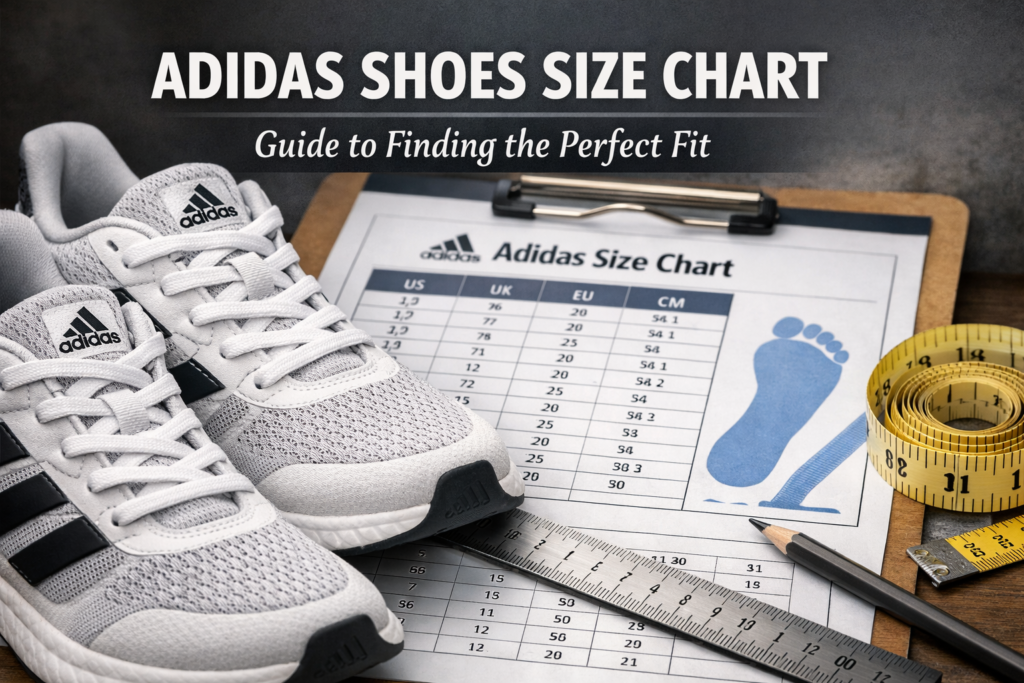
Adidas Shoes Size Chart
Choosing the right shoe size is crucial for comfort, performance, and long-lasting wear. Adidas Shoes Size Chart serves as a guide to help customers select the perfect fit for men, women, and children. With variations in shoe models, international sizing standards, and personal preferences, understanding how to use a size chart can save you from discomfort and mistakes when buying your next pair of Adidas shoes.
Adidas is a global leader in sports and lifestyle footwear, and their shoes are designed for performance, style, and comfort. However, inconsistent sizing across different regions can make it challenging to pick the right size without guidance. The Adidas Shoes Size Chart provides accurate conversions and recommendations to ensure the shoes fit properly, whether you’re buying running shoes, sneakers, or casual footwear.
This article will guide you through Adidas sizing, how to measure your feet accurately, factors affecting fit, and tips for choosing the best size. Additionally, it will answer frequently asked questions to make your shopping experience seamless.
Understanding the Adidas Shoes Size Chart
Adidas provides a comprehensive size chart that includes measurements for men, women, and children. It outlines international size conversions, including US, UK, and EU standards, as well as the corresponding foot length in centimeters.
The chart is particularly helpful for online shoppers who cannot try the shoes before purchasing. By comparing your foot measurement to the Adidas size chart, you can determine the most accurate size and reduce the chances of returns or exchanges.
It’s important to note that sizes may slightly differ depending on the shoe model. Running shoes, casual sneakers, and sports shoes may have different fits, so checking the model-specific recommendations along with the general size chart is recommended.
How to Measure Your Foot Accurately
Getting an accurate foot measurement is the first step to finding the right Adidas shoe size. To measure your foot, place a piece of paper on the floor and stand on it with your heel against a wall. Mark the longest point of your foot, usually the tip of the big toe, and measure the distance in centimeters.
It’s best to measure both feet, as one foot may be slightly larger than the other. Use the larger measurement when consulting
Keep in mind that foot size can fluctuate due to factors such as age, weight, and daily activity. Measuring your feet at the end of the day, when they are slightly swollen, can help ensure a more comfortable fit.
Men’s Adidas Shoes Size Chart
For men, Adidas provides a detailed size chart covering US, UK, EU, and JP sizes. The chart also includes foot length in centimeters, allowing for precise conversions. Men’s shoe sizes range from small to large, accommodating different foot shapes and lengths.
For example, a US size 9 corresponds to a UK size 8.5 and an EU size 42 2/3, with a foot length of approximately 27 centimeters. Referring to the size chart before purchasing ensures you choose the most accurate size for your needs.
Women’s Adidas Shoes Size Chart
Women’s sizes differ from men’s, and using the correct chart is essential for comfort and fit. Women’s Adidas shoes often run smaller than men’s in the same US sizing, so it’s important to consult the dedicated women’s size chart.
For instance, a US women’s size 8 corresponds to a UK size 5.5 and an EU size 38, with a foot length of about 24 centimeters. Understanding these differences prevents sizing errors, especially when ordering shoes online or converting between regions.
Kids’ Adidas Shoes Size Chart
Adidas also offers shoes for children, with separate charts for toddlers, little kids, and big kids. Kids’ sizes are usually represented in US, UK, EU, and JP measurements. Using the Adidas Shoes Size Chart for children ensures proper growth allowance, comfort, and support for developing feet.
Children’s shoe sizing can be tricky because feet grow quickly. It’s recommended to allow a small margin for growth while ensuring the shoe is not too large to prevent instability. Regularly checking foot length and comparing it with the size chart ensures the perfect fit over time.
Factors Affecting Fit
While the size chart provides guidance, several factors can affect the actual fit of Adidas shoes. Foot width, arch height, and personal comfort preferences all play a role.
Some Adidas models are designed with narrow or wide fits, and certain sports shoes may have tighter toe boxes for better performance. Considering these factors alongside the Adidas Shoes Size Chart helps ensure a comfortable and supportive fit.
Additionally, the type of socks you wear can impact shoe fit. Thick or cushioned socks may require going half a size up for a snug fit, especially in running or sports shoes.
Tips for Choosing the Right Size
Always measure your feet before consulting the Adidas Shoes Size Chart. Compare your measurements to both the general size chart and the model-specific recommendations provided by Adidas.
If you are between sizes, it’s often recommended to go up half a size for more comfort, especially for athletic shoes. Pay attention to the type of activity the shoes are designed for—running, training, or casual use—as this can influence the optimal fit.
Trying shoes on in-store or ordering from retailers with a flexible return policy can also reduce sizing issues. Taking these precautions ensures that your Adidas shoes fit perfectly, maximizing both comfort and performance.
Caring for Adidas Shoes
Proper care prolongs the life of your Adidas shoes. Regular cleaning with a soft brush or damp cloth prevents dirt buildup and maintains the appearance of your footwear.
For leather models, using a conditioner prevents cracking and keeps the material flexible. Fabric or mesh shoes benefit from gentle washing with mild soap and water. Avoid excessive heat, which can damage adhesives and materials.
Storing shoes in a cool, dry place preserves their shape and prevents odors. Rotating between multiple pairs of shoes also reduces wear and prolongs the life of your footwear.
Common Mistakes When Choosing Adidas Shoes
Many people make sizing errors by assuming international sizes are equivalent without consulting the Adidas Shoes Size Chart. Ignoring foot width, activity type, and model-specific recommendations can result in discomfort or poor performance.
Wearing shoes that are too tight may cause blisters and long-term foot issues, while shoes that are too loose can affect stability and gait. Taking accurate measurements and considering all factors ensures that Adidas shoes provide the intended comfort and support.
FAQs
1. How do I convert Adidas US size to EU size?
Use the Adidas Shoes Size Chart to compare US, UK, and EU sizes accurately, factoring in foot length in centimeters for precision.
2. Should I size up if I have wide feet?
Yes, for certain models, going half a size up may provide a more comfortable fit without sacrificing support.
3. Can I use men’s sizing for women’s Adidas shoes?
It’s not recommended; women’s shoes have different sizing standards. Always refer to the women’s Adidas Shoes Size Chart.
4. How often should I measure my child’s feet?
Children’s feet grow quickly, so measuring every 2-3 months and comparing to the Adidas Kids Shoes Size Chart ensures proper fit and comfort.
5. Do all Adidas shoes fit true to size?
Fit can vary by model and design. Always consult the Adidas Shoes Size Chart and model-specific recommendations for accurate sizing.
Conclusion
The Adidas Shoes Size Chart is an essential tool for ensuring the perfect fit for men, women, and children. Proper measurement, understanding regional size conversions, and considering foot width and activity type are crucial for choosing the right Adidas shoes.
By following the sizing guide and practicing proper shoe care, you can enjoy maximum comfort, durability, and performance from your Adidas footwear. Accurate sizing enhances your experience, prevents foot problems, and ensures that every step is comfortable, whether in sports, casual activities, or daily wear.